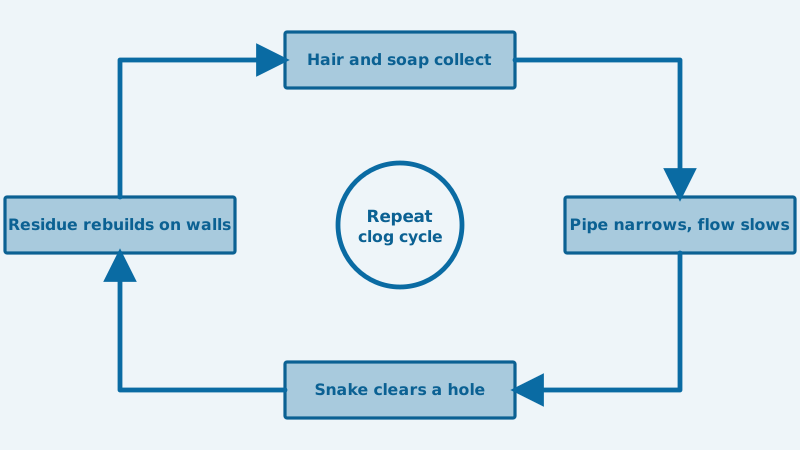
If you have cleared your shower drain twice this month, the clog is not bad luck. Something keeps feeding it, or the first clearing only reached the top of the problem. Hair is the most common culprit, but soap scum, hard water and a partly blocked vent or branch line can all bring the clog back. This page helps you tell them apart. For the full toolkit, see our shower clogged drain page.
What makes a shower drain clog over and over?
Hair bound together by soap scum. Hair is stronger than most things that go down a drain. It catches on the strainer, the crossbar or the rough edge of the pipe, and soap, body oil and conditioner wrap around it. Each shower adds another layer, so the same clog returns.
Three ingredients make the cycle:
- Hair, which does not dissolve.
- Soap scum, which is fat from bar soap combined with minerals.
- Hard water scale, which narrows the pipe wall and gives hair something to grip. LADWP reports hardness that varies across the city, from roughly 5 to 16 grains per gallon depending on where you live, so some neighborhoods see more scale than others.
Add shaving, shampoo and flakes of skin, and a shower drain can fill faster than any other drain in the house. Showers are also used daily, so the buildup never gets a rest.
Why does it clog again right after snaking?
Because a snake often pokes a hole through the clog without removing it. The water runs for a few days through the narrow hole, then the buildup closes again. This is especially true for a cheap hand tool, which can push the mass deeper instead of pulling it out.
If a tub or shower will not drain after snaking, three things may be going on: the snake never reached the full clog, it went down a different branch, or the blockage is past the first bend in the main drain. A plumber who clears the line with a cable that grabs hair, or with a hydro jet that scours the pipe wall, usually ends the cycle. Our guide to why a drain is still clogged after snaking goes deeper on that part.
Can baking soda and vinegar fix a clogged shower drain?
Sometimes, for a mild slow drain, but not for a hair clog. Baking soda and vinegar fizz and loosen light soap film, and a cup of each followed by hot water can freshen a drain. They do not dissolve hair, which is the main blocker, so a heavy clog needs mechanical removal.
If you want to try it:
- Remove any visible hair first.
- Pour a half cup of baking soda down the drain.
- Follow with a cup of white vinegar and cover the drain for about fifteen minutes.
- Flush with hot tap water.
Treat it as maintenance, not a repair. For stronger ideas and their limits, see our clogged drain home remedy guide. Skip mixing in commercial cleaners, since fumes can be dangerous.
How do I remove the clog myself?
Pull the strainer or stopper, remove what you can see with a plastic drain tool or a bent wire, and then run hot water. A cheap plastic zip tool with barbs pulls out most shower hair clogs in a minute, which is why plumbers often start there. Replace the strainer with a fine mesh catcher afterward.
A fuller routine:
- Unscrew the drain cover. Many have a single screw in the center.
- Pull the hair mat out by hand with gloves, or use the barbed tool.
- Wipe the visible walls of the drain pipe.
- Run hot water for a minute and watch the speed.
- Put a mesh catcher in place and empty it after each shower.
Do not use a plunger over a drain full of chemical cleaner, because it can splash. If this routine does not clear it, move on.
Why does the toilet gurgle when the shower drains?
It means the shower and the toilet share a line, and air is being forced out of the toilet trap as water moves down it. Usually the cause is a partial blockage downstream of both, or a vent that is not letting air in, so the water pulls air through the nearest trap.
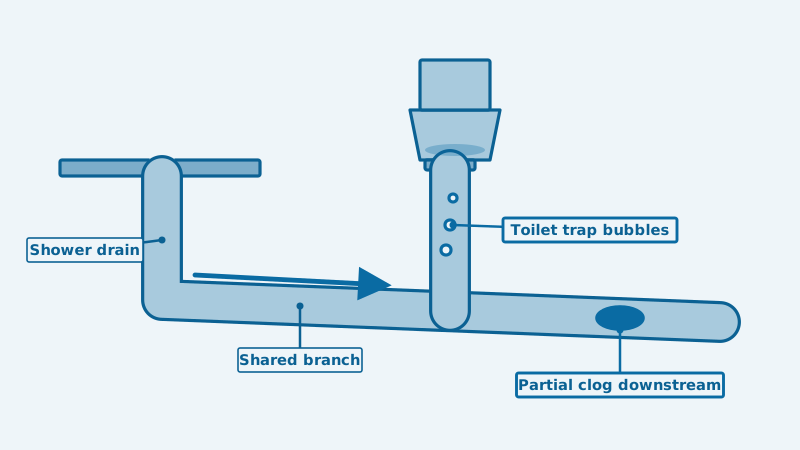
Gurgling from a toilet when the tub or shower drains is a step beyond a local hair clog. It can mean the branch line or the main line is partly restricted. If it also happens when the washer drains, the main line becomes the suspect. You can read how to read the signs in our pages on gurgling drains and the other drains that gurgle when a toilet flushes.
When is a repeat shower clog a bigger problem?
When the blockage returns within days, when more than one fixture is slow, or when you hear gurgling or smell sewage, the cause is no longer in the shower drain itself. The branch line may be coated with scale and grease, partly collapsed or invaded by roots, or the vent may be blocked.
A camera shows which it is. Cleaning a branch line with a hydro jet removes the coating that makes the clog return, and the camera shows whether the pipe is sound. On a Los Angeles house with older cast iron or clay pipe, scale and roots are common causes of repeat clogs further down. Our page on hydro jetting drain cleaning explains the method.
How do I stop it coming back?
Catch the hair before it enters, clean the strainer weekly, flush the drain with hot water after each wash, and avoid pouring oils or heavy conditioners down it. Every few months use a drain tool to clear the first few inches. A catcher costs a few dollars and prevents most repeat clogs.
If your water is hard, a descaling routine helps, and a water softener may be worth discussing, though it is a separate decision from drain cleaning. If the clog keeps returning even with a catcher in place, treat it as a pipe problem and have it checked.
If your shower keeps clogging, request a price and we'll arrange a visit to clear it and look at the line. You can also see our other services on the LA Drain Works home page.
Questions people ask
How long does it take to clear a shower drain?
A hair clog at the strainer takes minutes. A cable or jet visit for the branch line usually takes an hour or two. If a camera look is needed or damage turns up, expect longer, and ask for the change in writing.
What should I ask before I hire someone to clear a shower drain?
Ask whether the price clears the whole branch line or just the first stretch, whether a camera is available if it returns, and what the plan is if the first attempt fails. Ask the plumber to show you what came out.
Do I need to be home for the visit?
Yes, at least when the plumber arrives, so they can reach the shower and any access panel. Clear the tub area and nearby cabinets, put out any towels you want protected, and tell us if the access panel sits behind a wall or in another room, since that changes how long the visit takes.
Is it bad to use drain cleaner on a shower drain?
Often it is a poor choice. Cleaners can sit in a slow drain, damage old pipe and fixtures, and splash onto skin and eyes. They also do not dissolve hair well. If you have used one, tell the plumber before they start so they can protect themselves.
Why does the water from the shower back up into the tub?
The water has nowhere to go because the drain is blocked at or below the trap. A single fixture backing up usually has a local clog, while several fixtures backing up points to the main sewer line. Stop using water and have it checked.
Sources used
- LADWP, Water Quality FAQs
- California Plumbing Code, Chapter 10 Traps and Interceptors (2016 edition, Lake County copy)
- Published guides from Southern California drain cleaning businesses, checked November 2026
Page updated