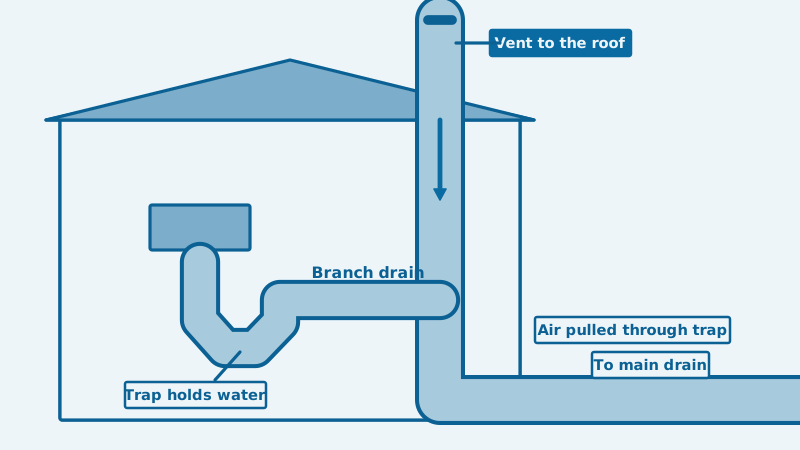
That glug, bubble or burp coming from a drain is air, not water. Pipes in a house need air to flow: when water moves down a drain, air has to follow it, normally through a vent pipe that rises to the roof. When something blocks that air, or blocks the water, the air finds another way, usually through the water in a nearby trap, and you hear a gurgle. The sound is an early warning, and the pattern tells you what to do. Our clogged drain vent page covers the vent side in detail.
Why are my drains gurgling?
Gurgling means air and water are fighting for the same pipe. Either a clog is slowing the water so air gets trapped and pops through a trap, or a blocked vent is leaving the drain without the air it needs, so it pulls air through the nearest trap instead. Both are partial restrictions, not total blockages.
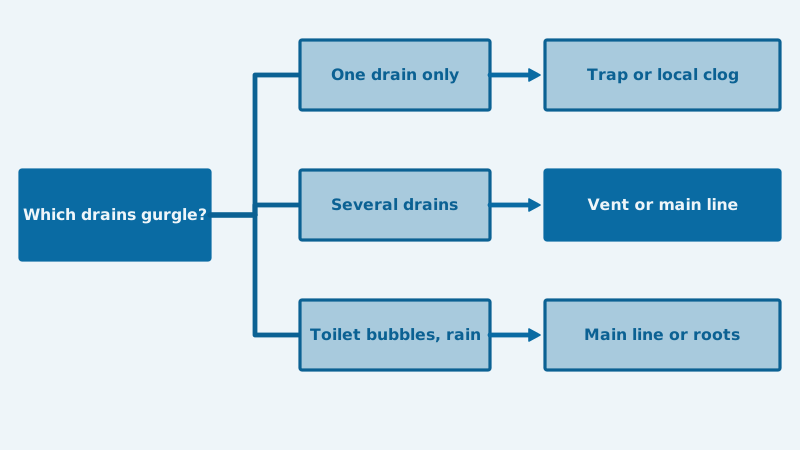
The easiest way to separate them is to notice when it happens:
| When it gurgles | What it usually means |
|---|---|
| One drain, right after use | Clog in that fixture's own pipe |
| A drain when another fixture empties | Shared branch line is partly blocked |
| Toilet gurgles when the washer drains | Main line restriction |
| All drains, plus slow flow and a smell | Main sewer line problem |
| Gurgling and slow drains after a rainy week | Roots, cracks or a surcharged line |
What causes gurgling in more than one drain?
When several drains gurgle together, the cause is almost always shared: a branch line or the main line is partly blocked, or the main vent is blocked. A single drain with its own clog would not affect the others, so the pattern points to the pipes they share.
Common shared causes include:
- Grease and wipes lining the pipe wall and narrowing it.
- Tree roots growing into a joint, which catch paper and slow the water.
- A sagging section where water pools, blocking air and flow.
- A partly collapsed pipe, more common in very old fiber, clay or cast iron.
- A blocked roof vent, with leaves, a nest or debris in the opening.
This is also where slow drains show up. If the sink, tub and toilet are all slow and gurgling, you are looking at drain lines and drain pipes shared by every fixture, and the main line is the first place to check. Our page on the main sewer line explains how it is cleared.
Why do my drains gurgle after rain?
Drains that gurgle after heavy rain often point to the sewer line, not the fixtures. Wet ground can push soil and water through cracks and joints, roots grow harder in wet soil, and the public sewer may be running full. Any of these slows the flow out of your house, and the air has to leave by the traps.
Los Angeles has a distinct rainy season, and plumbers there commonly report calls rising after storms for this reason, though we cannot give you a figure. If the gurgling stops when the rain stops, the line may be partly cracked. If it continues, the line is probably partly blocked. Avoid running the washer or dishwasher during a storm, and watch the lowest drain in the house.
If water rises in a tub or floor drain, stop using water and read our page on emergency sewer backup. The City and County both say the private lateral, including the part under the street, belongs to the owner, so a blockage past your cleanout may still be your responsibility. If the public main is the problem, the agency deals with it.
Is it the vent, the trap or the main line?
Test in order. A single fixture that gurgles on its own points to its trap or its own pipe. A fixture that gurgles when another one drains suggests the branch line or the vent. Every fixture gurgling, with slow drains and a smell, points to the main line. A camera is the way to confirm.
A simple home test: run the bathroom sink at full flow and listen at the toilet and tub. Then flush the toilet and listen at the sink. Note which pairs interact. Write it down, with the time of day and anything that seems to trigger it. Plumbers use that pattern to decide whether to start at the roof, at the fixture or at the cleanout.
If the roof vent is the suspect, do not climb a wet or steep roof yourself. That is a fall risk, and many Los Angeles hillside houses have steep or hard-to-reach roofs. A plumber can check it with a camera or a cable from the roof.
How do you stop drains gurgling?
Remove the cause. For a single drain, clear the trap and the pipe behind it. For a shared line, clear the branch line with a cable or hydro jet. For a vent, clear the opening at the roof. For the main line, a camera and a cleaning are needed, and sometimes repair of roots or a damaged section.
Things that help in the meantime:
- Avoid running several fixtures at once.
- Do not pour chemical cleaners into a gurgling line; they rarely reach the problem and can damage old pipe.
- Do not ignore it: gurgling usually gets worse, and a partly blocked line can become a full blockage.
- Keep a record of when it happens, since it helps the plumber.
For tools that match the cause, see drain snaking and hydro jetting.
Is gurgling dangerous?
Not by itself, but it can come with sewer gas. If the trap seal is pulled out by the gurgle, gas can enter the room, and you may notice a smell. The California Plumbing Code requires traps and vents for exactly that reason. Treat a gurgle with a smell as a reason to act soon.
If gurgling comes with water or sewage rising in a tub or floor drain, stop using water and keep people and pets away. If anyone feels dizzy or short of breath, leave the house and call 911.
If your drains are gurgling and you want to know why, request a price and we'll arrange a visit with a camera. You can also see more on the LA Drain Works home page.
Questions people ask
How long does it take to fix gurgling drains?
Clearing one fixture drain takes about an hour or less. A branch or main line with a cable or jet usually fits in one visit. If the camera finds roots, a sag or a collapse, the repair takes longer and gets its own quote with a schedule.
What should I ask before I hire someone about gurgling drains?
Ask whether the price includes a camera look, whether the vent will be checked as well as the drain, and what happens if the first fix does not work. Ask for the footage and a written quote before any work starts.
Do I need to be home for the visit?
Yes, at least at the start. The plumber needs to hear and see which fixtures gurgle, find the cleanout, and perhaps reach the roof. Tell us about locked gates or pets ahead of time so the visit does not stall.
Why does my toilet gurgle when I run the washing machine?
The washer and the toilet usually share the main drain, and the toilet trap is the nearest place for air to escape. It suggests a partial blockage in the shared line or main sewer line. It is worth a camera inspection soon.
Can a gurgling drain fix itself?
A dry trap or a leaf in a vent may clear on its own, but a blockage from grease, roots or a damaged pipe does not. Gurgling that returns, or comes with slow drains or a smell, will usually get worse without help.
Sources used
- California Plumbing Code, Chapter 10 Traps and Interceptors (2016 edition, Lake County copy)
- LA County Public Works, sewer lateral customer information
- Published guides from Southern California drain cleaning businesses, checked November 2026
Page updated