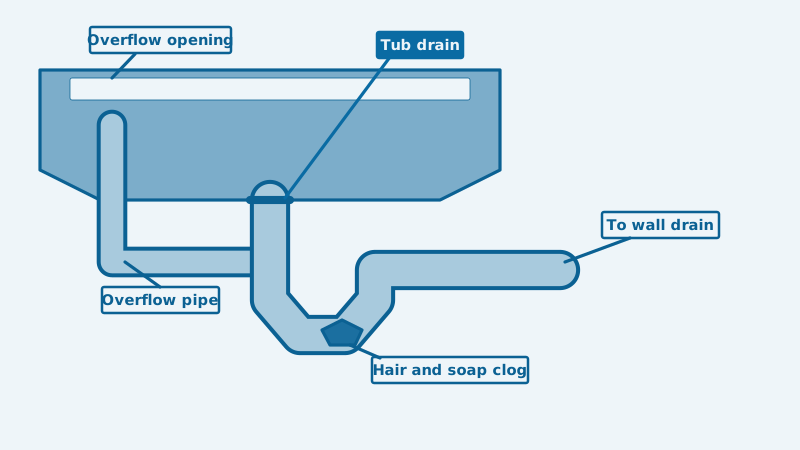
To drain a clogged bathtub, remove the stopper, pull out the hair and soap with a barbed plastic strip, then flush with hot water. If water still stands, plunge with the overflow sealed, and then use a small hand snake. Most tub clogs are within a foot of the drain opening. This page covers all three steps in order, and what it means when none of them works. It sits within our guide to shower and tub drains, which has more on the other fixtures.
How do you know if your bathtub or shower drain is clogged?
A clogged tub drain shows up as water that pools around your ankles in the shower, a tub that takes minutes to empty after a bath, or a gurgle as the water finally goes. A bad smell from the drain after the water drops is a common extra sign. Slow water alone is a partial clog, and standing water means a full one.
Check one thing first: is it only the tub? Run the bathroom sink and flush the toilet. If those drain normally, the clog is in the tub's own branch. If the sink or toilet is also slow, or water appears in another drain when you empty the tub, the blockage is farther down and a tub-level fix will not reach it.
Look at how the water moves, too. Water that drains slowly from the start of a shower points to hair and soap near the stopper. Water that drains fine for a minute and then backs up points to something deeper, where a mass of debris takes time to fill the pipe.
How do you unblock a shower drain or tub drain?
Remove the stopper or strainer, lift out the hair with a barbed strip or bent coat hanger, and rinse with hot water. If the water is still slow, seal the overflow with a wet rag and plunge firmly 15 to 20 times. A hand snake handles what the strip and plunger cannot reach.
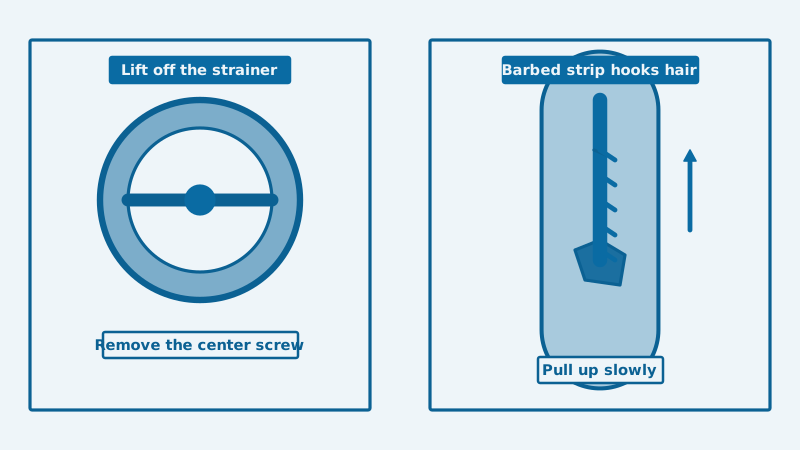
Start by working out which stopper you have, because it decides how you reach the drain:
- Lift-and-turn or toe-touch stopper. Unscrew the cap, then the center screw or the whole stopper unthreads by hand. Pull out what is wrapped around the post.
- Pop-up stopper with a lever. The lever on the overflow plate moves a rod. Pull the stopper straight up and out, then clean the rocker arm and rod. They gather hair like a comb.
- Trip-lever with a plunger linkage. The plunger rod sits behind the overflow plate. Unscrew the plate, ease the linkage out of the overflow pipe, and wipe it clean.
- Shower drain with a flat grate. Lift the grate with a screwdriver and clear the hair from the basket underneath.
With the stopper out, run the strip down the drain. Push it in about a foot, twist, and pull it out slowly. You will usually see a wad of hair and grey slime. Repeat until it comes out clean, then run hot water for a minute. Use hot, not boiling, from the tap. A water heater set high can scald, and boiling water can soften older plastic pipe joints.
If the tub still holds water, go to the plunger. Block the overflow with a wet rag, put an inch or two of water in the tub, and use a cup plunger with firm strokes. A hand snake is the next step, fed through the drain opening or through the overflow if the stopper is built in.
Can baking soda and vinegar fix a clogged tub?
Baking soda and vinegar can loosen a thin film of soap, but they will not move a hair clog. Pour a cup of baking soda down the drain, add a cup of vinegar, wait 15 minutes, and flush with hot water. Use the fizz for maintenance. When water is standing in the tub, pulling the hair out works far better.
The reason is simple: the foam is mostly gas and water, and hair is not soluble in it. Baking soda mildly scrubs and vinegar mildly dissolves mineral scale, which is why the pair makes a decent monthly freshener, not a fix. If the water is already standing, the fizz also has nowhere to go. Do not pour a commercial drain cleaner on top of leftover vinegar or baking soda, and never mix drain cleaners with bleach, because the fumes can be dangerous. Breathing something harsh is a reason to step outside and call Poison Control at 1-800-222-1222 or use the online tool at poison.org.
Why does my bathtub drain keep clogging?
After a few weeks of showers, a tub drain keeps clogging because hair catches on the stopper hardware and binds with soap scum, which builds up faster in hard water. Each shower adds a layer, and a thin pipe slows the flush that would carry it away. Pulling the hair out fully, not just poking it, is what stops the repeat.
Three things usually sit behind a repeat clog:
- Hair that was pushed down, not pulled out. A plunger or a drain cleaner can shove a clump deeper, where it catches again a few feet along.
- Soap scum and hard water. Bar soap and body wash leave a waxy film, and hard water, a feature of much of Southern California tap water, leaves a mineral crust that roughens the pipe and holds on to more hair.
- A long or shallow run of pipe. Where the tub line travels a long way with little fall, debris settles instead of flowing out. Older homes often have more joints and older pipe, which gives hair more to catch on.
Stopping the cycle is cheap. Fit a mesh catch over the drain, pull out the hair after the last shower of the day, and flush with hot water weekly. A barbed strip run once a month beats waiting for a standing-water emergency.
When should you stop and call for help with a tub drain?
Call for help when a snake feeds in more than 20 feet with no change, when water comes up in another fixture, or when the tub clogs again within a week of being cleared. These signs point to a blockage in the shared line. A local drain cleaner can look inside the pipe with a camera.
If you are in the City of Los Angeles, remember the property owner owns the whole private sewer lateral, so a main line blockage becomes your problem to fix. A sewer backup that shows in a tub is a separate case: see sewer backup in a bathtub. For deeper tub-specific methods, see snaking a bathtub drain and bathtub drain cleaning. Want a price before you decide? Send the tub details through the quote page and we'll arrange for a local drain cleaner to look at it. The rest of what we cover is on the LA Drain Works home page.
Questions people ask
What can I use if I have no drain snake?
A bent wire coat hanger with a small hook at the end will pull out hair from the first foot or two. A wet-dry vacuum set to liquid with a tight seal around the drain can also pull a clog loose. Neither reaches as far as a real snake, so a deeper clog will need one.
Is it safe to use drain cleaner in a tub?
It is risky. Drain cleaner can splash back, damage older finishes and, if it does not work, leave a pool of harsh liquid sitting in the tub that you or a plumber must then handle. Try a strip, plunger and snake first. If you have used a chemical, tell anyone who works on the drain.
How long does it take to clear a clogged tub?
A barbed strip or plunger job takes 10 to 20 minutes including taking the stopper out and rinsing. A hand snake adds another 20 minutes or so with cleanup. If you are an hour in and the water has not moved, the blockage is probably farther down the line than you can reach.
Does a slow tub drain mean a sewer problem?
Not usually. A single slow tub is nearly always hair and soap in its own branch. A sewer problem shows up in several fixtures at once, in gurgling toilets, or in sewage coming up in the lowest drain. If only the tub is slow, fix it at the tub first.
Sources used
Page updated