Cleaning out a main sewer line means pushing a cable or a jet of water through the large pipe that leaves your house and meets the city sewer, until the blockage is gone and water runs freely. A cleaner poured in from a store rarely does that. This page is the job step by step. For symptoms and the full picture, see our guide to main line drain cleaning in Los Angeles.
What does cleaning out a main sewer line actually involve?
A plumber finds a way into the pipe, usually an outdoor cleanout, sends in a motorized cable with a cutting head or a high-pressure water jet, works it past the blockage, then pulls it back and runs water to test the flow. The job is about reaching the clog, breaking it up, and scouring the pipe wall.
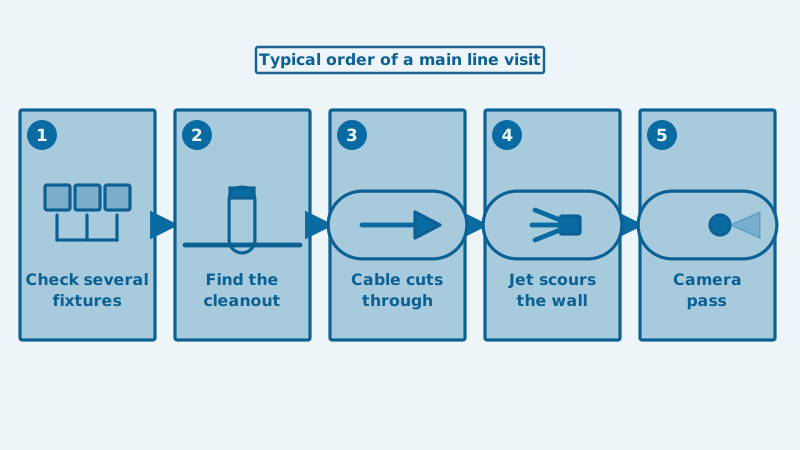
Most visits follow the same order:
- The plumber confirms it is the main line by checking several fixtures, not one.
- They locate the cleanout, or pull a toilet or climb to a roof vent if there is none.
- A cable goes in until it meets resistance. A head chosen for the clog, such as a blade for roots or a spear for soft buildup, cuts through.
- If the cable only punches a hole, a jet follows to clean the walls.
- A camera pass shows what caused the stoppage.
The camera step matters in older neighborhoods. Roots and a sagging or cracked pipe mean the clog comes back, however clean the cable leaves it. Our page on sewer camera inspections shows what that visit finds.
Which main sewer line cleaner works, and which one is a waste?
For a true main line clog, mechanical cleaning works and poured cleaners mostly do not. A liquid cleaner needs to sit on the blockage, and a main line carries a heavy flow that dilutes and carries it away. Foaming root products are the exception, used to slow roots after the line is open.
Here is how the common choices compare for a main line:
| Cleaner type | What it does in a main line | Honest verdict |
|---|---|---|
| Caustic or acid drain liquid | Needs standing contact, harsh on old pipe | Poor fit, and it makes a later repair hazardous |
| Enzyme or bacterial treatment | Slowly digests grease and organic film | Maintenance only, never an emergency fix |
| Foaming root control | Coats pipe wall where roots enter | Useful after clearing, see our root killer page |
| Cable with cutter head | Cuts through roots and soft clogs | The usual first tool |
| Hydro jet | Scours the whole pipe wall | Best for grease and repeat clogs |
We cover the chemistry in more depth on our page about the best chemical to unclog a sewer line. The short version: if sewage is already rising in a tub or floor drain, a cleaner will not reach the clog, and the person who clears it later has to handle whatever you poured in.
Can you clean out a main sewer line yourself?
You can try a hand-cranked cable through a cleanout if you can find one and the line is only slow, not backing up. Stop if the cable meets a hard stop it will not pass, if sewage is rising, or if you reach the end of a short cable. Renting a large machine is where people get hurt or damage pipe.
A few cautions from the trade. Opening a cleanout cap when the line is full lets sewage out under pressure, onto your yard. Wear gloves and eye protection, and keep the cap handy. A cable pushed hard against a broken joint can catch and snarl. And a cable cannot tell you what is wrong with the pipe, so a clear line is not the same as a healthy one.
If you have never cleared a main before, we think the call is worth it once. A plumber's camera shows whether the problem is a one-off or a pipe that needs more than cleaning. The how to unclog a main drain line guide goes through the home steps in detail.
Who is responsible for the main sewer line in Los Angeles?
In the City of Los Angeles, you own and maintain the private sewer lateral, the pipe from your building all the way to the connection at the city main, including the section under the street. LA County Public Works says the same for properties it serves. The city main in the street belongs to the public system.
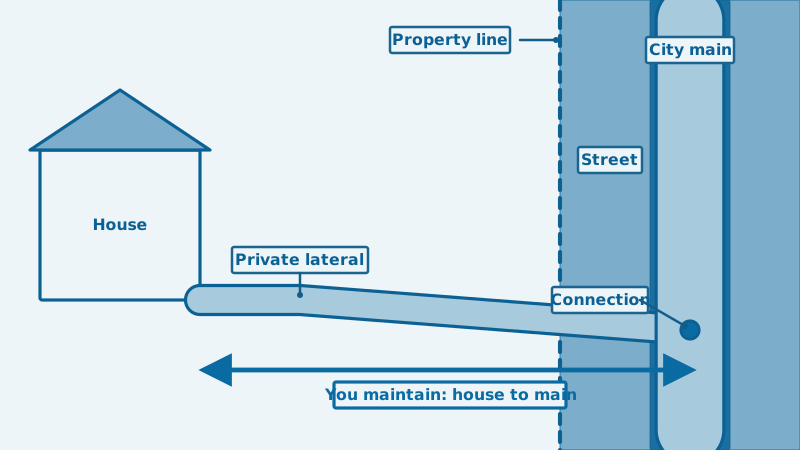
That matters on the day of a backup. If only your house is affected, the stoppage is usually in your lateral. If sewage is coming out of manholes or neighbors are affected too, the city main is the likely cause, and LA Sanitation has a Customer Care Center at 1-800-773-2489 that is open 24 hours a day. LA Sanitation also notes that most backups it sees come from tree roots and poured fats, oils and grease, which fits what plumbers find in older Los Angeles neighborhoods.
When should you call a plumber to clean the main line?
Call as soon as more than one drain is slow, a toilet gurgles when the shower runs, or anything backs up into the lowest tub or floor drain. A blocked main only gets worse, and sewage in the house turns a few-hundred-dollar clear into a cleanup bill. Do not wait to see if it drains on its own.
Call too if the same line has been cleared before, if the home is older, or if there are big trees near the sewer path. The work is regulated: in California, jobs of $1,000 or more in labor and materials need a contractor with the right CSLB classification, and LA Sanitation points to a plumbing contractor (C-36) for work on your property and a Bonded Sewer Contractor for work in the street. We'll arrange a visit and you get a written quote before work starts. For typical prices, see what a main sewer line clog costs.
If you want a number first, request a written price. Our home page lists everything else we arrange.
Questions people ask
How long does cleaning out a main sewer line take?
A straightforward cable job through an accessible cleanout often takes an hour or two. Add time if the plumber has to pull a toilet or work from the roof, if roots are heavy, or if the line needs a jet and a camera pass afterward. A half day is realistic for a stubborn root-filled line.
What should I ask before I hire someone to clean out my main line?
Ask whether the price covers a camera pass, whether the quote changes if they have to pull a toilet, what tool they plan to use, and whether they provide a video or notes afterward. Also ask which CSLB classification the contractor holds. A written quote before work starts is the norm.
Do I need to be home when the main line is cleaned?
Usually someone should be there to let the plumber in, show them the cleanout, and approve any added work. If the cleanout is outside and accessible, some jobs go ahead without anyone indoors, but you will want to see the camera footage. Agree the details when you book.
Can the main line be cleaned without a cleanout?
Yes, but it costs more. Plumbers can go in through a pulled toilet or a roof vent, which takes longer and risks a mess. If your house has no outdoor cleanout, it is worth asking for a price to install one while the line is open, because it makes every later clearing faster.
Sources used
- LA Sanitation, Managing and Protecting LA's Underground Sewer System
- Los Angeles County Public Works, Sewer
- Drain cleaner, safety and chemistry
- Published prices of Los Angeles drain cleaning businesses, checked November 2026
Page updated