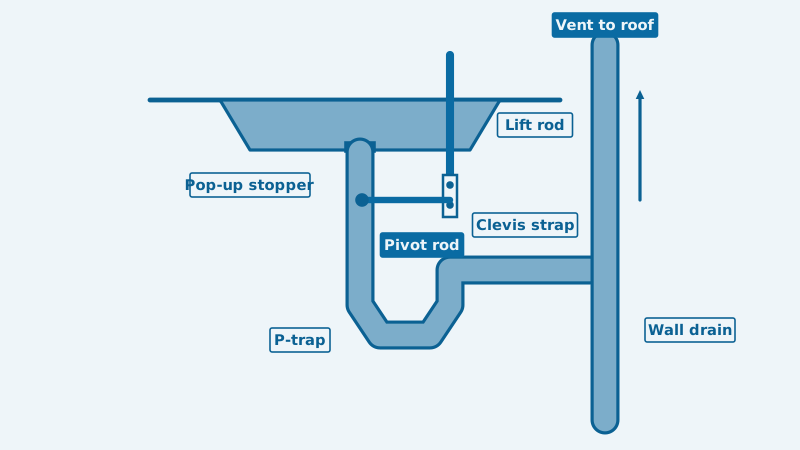
If a bathroom sink will not drain and you cannot find a clog, the cause is usually one of four things: a pop-up stopper that is not lifting, a layer of hair and soap film coating the tailpiece, a partly blocked trap that lets only a trickle through, or a vent problem that makes the pipe gulp instead of flow. Each has a different test. The short checks below take about ten minutes, and the sink drain overview shows where this fits among other sink problems.
Why won't my bathroom sink drain if nothing is clogged?
Most "not clogged" sinks have a partial restriction, not a full one. A pop-up stopper that sits half closed, a pivot rod that has slipped out of its clevis, or a coat of soap scum thick enough to narrow the pipe all let the water in while keeping it from leaving fast.
The pattern matters more than the symptom. Fill the basin and watch. If water drops a little and then stalls with the stopper up, something is in the way. If it barely moves at all when the stopper is raised, the stopper itself is probably the problem. If it drains fine at first and then slows, a trap or a bend further down is catching the load.
Unlike a kitchen sink, a bathroom basin has no food waste in it. What narrows the pipe is hair, toothpaste, soap and skin products, which bind together into a grey paste.
How do I check whether the pop-up stopper is the problem?
Open the stopper with the lever behind the faucet and look at how far the plug rises. It should lift about half an inch or more above the drain opening. If it barely moves, the linkage under the sink has come loose or the plug is jammed.
Look under the basin for a thin horizontal rod running into the back of the drain pipe. A strap with holes, called the clevis, connects it to the lever rod, and a small nut holds the pivot. Hand-tighten that nut if it is loose, or move the rod to a higher hole on the strap if the plug does not lift far enough.
Many stoppers lift straight out, and some twist a quarter turn first. Pull yours free and check the underside. Hair loves to wrap around the crosspiece. Wipe it clean and drop it back in. In a surprising number of cases, that is the whole repair.
What does a slime-coated or half-blocked pipe look like?
A coated pipe drains slowly but never stops. The water level creeps down over a minute or two, gurgles briefly at the end and leaves a slick ring. Pull the stopper and shine a phone light down the opening. A dark, furry or slimy lining within the first few inches is the clue.
Pour a kettle of hot tap water, not boiling, from the faucet itself and let the sink run for a minute. If the speed picks up and then fades, a residue is holding on further down. A bent wire or a plastic drain-cleaning strip hooked down the opening usually brings a surprising amount of grey hair up from the first few inches.
If you want to treat the pipe afterwards, a half cup of baking soda followed by a cup of white vinegar foams for a few minutes, then flush with hot tap water. This is a gentle way to freshen a drain, but it will not dissolve a hair mat. Wikipedia describes sodium bicarbonate as a mild base that reacts with acids, and that is all the foam is.
Never follow a commercial cleaner with vinegar or any other product. Mixing household cleaners can release poisonous fumes, so follow each product label.
Can the trap be catching water without being fully blocked?
Yes. Under every basin is a curved section of pipe, the trap, built to hold a small plug of water that keeps sewer gas out. It is also where heavy debris settles. As it fills, the opening narrows and the sink drains slowly even though water still passes.
Put a bucket underneath, unscrew the two slip nuts by hand, and tip the trap out. A thick grey sludge, a lost earring or a bottle cap sometimes shows up. Rinse it, check the washers sit flat and reassemble hand-tight, then run water and watch the joints for drips. Our guide to cleaning a drain trap covers each step.
If the trap is clean and the water still crawls, the restriction sits in the wall pipe. A hand auger can reach it. See snaking a bathroom sink drain for how the cable is fed in.
What if the vent is the reason the sink drains slowly?
A drain pipe needs air behind the water. A vent pipe that runs to the roof supplies it. If that pipe is blocked, the water has to drag air through the trap, which causes gurgling and slow flow even when the drain itself is clear.
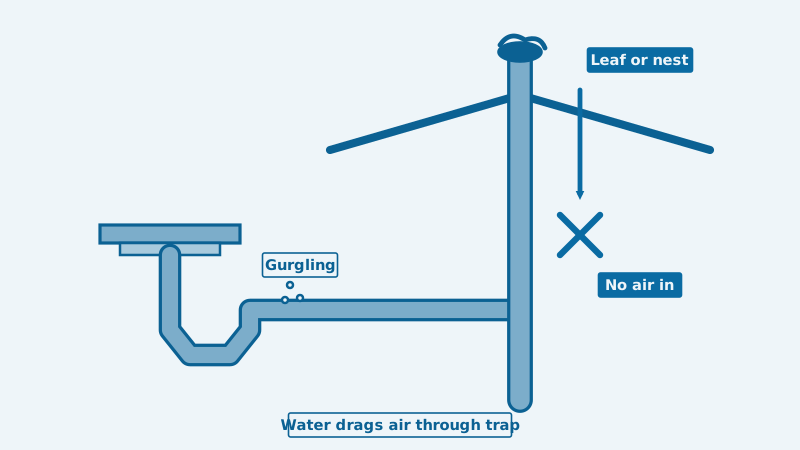
Signs of a vent problem: a gulping sound after the sink empties, other fixtures bubbling when this one drains, or slow drains that clear for a day after you snake them and then slow again. A leaf or nest in a vent opening is a common culprit. Roof work is dangerous, so do not climb up yourself. Our clogged drain vent page explains the symptoms and what a professional checks.
Gurgling that spreads across several fixtures also suggests the line below them is partly blocked. Read about gurgling drains before you buy more cleaner.
Why is my kitchen sink draining slowly with no blockage?
The same logic applies, with two extra suspects. A kitchen sink drains into a trap that also serves the garbage disposal and, often, the dishwasher hose. A disposal with a stuck flange, a clogged dishwasher air gap or a partly clogged disposal outlet can slow everything while looking clear.
Run the disposal briefly with cold water, then check whether the dishwasher drain loop is kinked. Kitchens also build up grease: LA Sanitation links over half of sewer backups to roots and poured grease, so scraping pans into the trash matters. A slow kitchen sink that clears after a hot-water flush and slows again within days usually has grease coating the pipe a few feet down.
For a kitchen that stays slow after the basics, snaking a kitchen sink drain comes next.
When is it time to call a drain cleaning business?
Call when the stopper works, the trap is clean, the vent is not obviously blocked and the sink still drains slowly. At that point the restriction is in the wall or in the branch line, which needs a longer cable or a camera. Also call if more than one fixture is slow.
Consider the visit worth the money once you reach this point, rather than adding more products. Other reasons to stop: a foul smell that returns after cleaning, water backing up in a tub or floor drain when the sink runs, or a pipe under the sink that is corroded, cracked or weeping. Do not force a cable through damaged metal pipe.
A local drain cleaner can come to you, and you see a written price before anything is touched. Costs for a single fixture are covered on our drain cleaning cost page. If you would like a visit, send a quote request with what you have tried and what you saw. The LA Drain Works home page lists everything we arrange.
Questions people ask
How long should a bathroom sink take to drain?
A basin filled to the overflow hole should empty in well under a minute, with a steady swirl. If yours takes two or three minutes, or leaves a pool, something is restricting it. Slow emptying that has been getting worse over weeks usually points to a coating in the pipe, not a sudden blockage.
Will baking soda and vinegar fix a sink that is not clogged?
It can freshen a coated pipe and sometimes improves flow a little, but it does not break up a mat of hair. Use it as a light clean after you have pulled the stopper and wiped the first few inches of pipe by hand, then flush with hot tap water.
Is it safe to use drain cleaner on a slow sink?
It is risky. Chemical openers contain strong alkalis or acids that can burn skin and eyes, and they pool in a sink that drains slowly. Never mix products. If a sink is slow, mechanical cleaning is safer. Call Poison Control at 1-800-222-1222 if anyone is exposed.
What should I ask before booking a visit for a sink like this?
Ask whether the visit includes a cable or camera and trap removal, and what the written quote covers. Also ask how a re-clog within days is handled. If you describe the stopper, trap and vent checks you have already done, the answer should be specific to your sink, not a stock reply.
Does someone need to be home for a visit about a slow sink?
An adult needs to let the visitor in and show where the sinks and the main cleanout are. Clear the cabinet under the basin first. You do not have to stand beside them, but being nearby helps when something unexpected turns up under the sink.
Sources used
Page updated