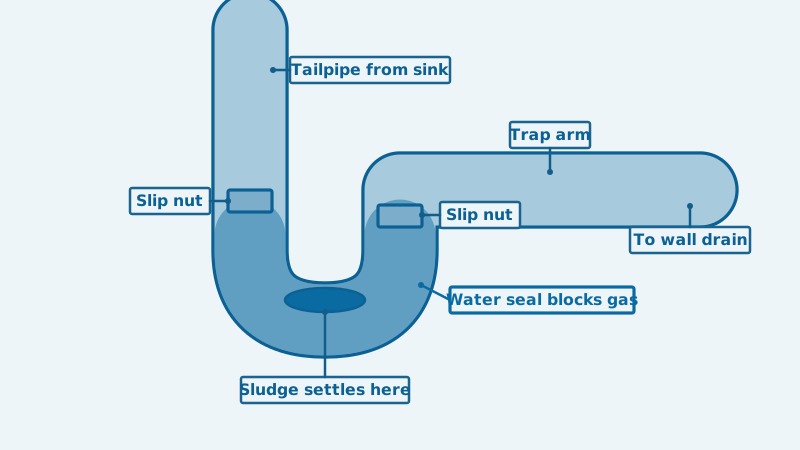
To clean a drain trap, put a bucket under it, unscrew the two slip nuts by hand, lower the U-shaped section, empty and scrub it, then refit it with the washers flat and the nuts snug. Run water and watch every joint for drips. The whole job takes about ten minutes and needs no special tools. It is the most direct fix for a slow sink, and it sits at the start of our sink drain guide.
What is a drain trap, and why does it clog?
A trap is the curved pipe directly under a sink. It holds a small plug of water that blocks sewer gas from entering the room, and it is also where the heaviest debris settles. Wikipedia notes that traps catch hair, sand, food waste and small objects such as coins or jewelry.
In the United States the common shape is called a P-trap because the outlet bend looks like a sideways P. Older or tighter installations sometimes use a bottle trap, which unscrews as a single cylinder. Either way, the water seal matters: if it dries out or gets siphoned, gas smells enter the room.
A trap clogs because it is the lowest point on the line. Anything denser than water stops there first. That is why a cleaning here often makes a bigger difference than a cable run does.
What do I need before I take the trap apart?
You need a bucket, a rag or old towel, rubber gloves, a flashlight and, for stubborn nuts, slip-joint pliers. Clear the cabinet, put the bucket directly under the trap and keep a small container nearby for the nuts and washers.
Some preparation prevents a mess:
- Take a phone photo of the assembly so you can reassemble it in the same order.
- Empty the basin of standing water with a cup first, so it does not all rush through the open pipe.
- Wear eye protection. If a chemical drain cleaner went in recently, the water in the trap may burn skin.
- If you have a garbage disposal on a kitchen sink, check that the disposal is switched off at the wall before reaching into the cabinet.
If the sink holds a lot of water because it is fully blocked, scoop it into a bucket first rather than letting it all fall through the open trap.
How do I remove and clean a sink drain trap?
Loosen the slip nut at each end of the trap by turning it counterclockwise by hand, with the bucket in place. Slide the nuts up the pipe, pull the trap loose and pour its contents into the bucket. Scrape out the sludge with a bottle brush, rinse the trap under running water and look through it to the light.
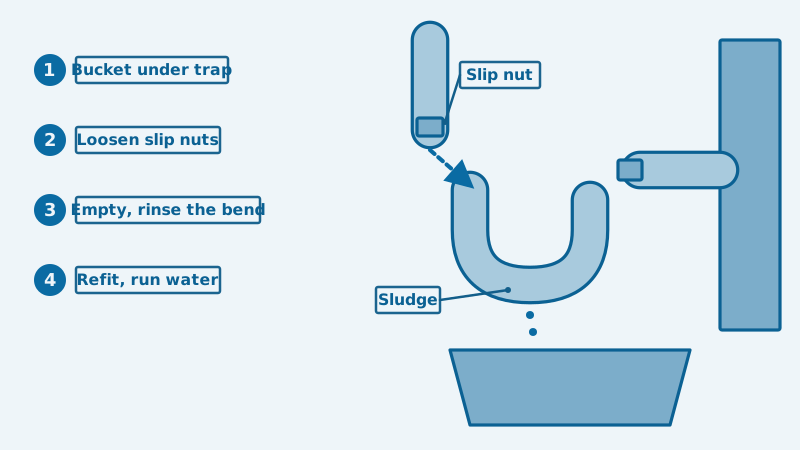
Then follow the steps in order:
- Loosen the nut on the tailpiece, the pipe dropping from the sink.
- Loosen the nut on the wall side, where the trap meets the arm.
- Lower the trap and empty it into the bucket.
- Scrub the inside and rinse it clean.
- Wipe the threads and check the washers for cracks or flattening.
- Refit, tighten by hand and a quarter turn more with pliers, then test.
Do not over-tighten plastic fittings. A cracked nut is a worse problem than the one you started with. For a metal trap, hand tight plus a gentle quarter turn is usually enough.
What does the sludge tell me?
What comes out of a trap points to the cause. Grey paste with hair means soap, skin products and shed hair, common in bathrooms. Thick, waxy orange or white matter in a kitchen trap is cooking fat. Grit and sand mean something is washing into the pipe, such as pet bedding rinse or aquarium gravel.
Food paste in a kitchen trap often comes from a garbage disposal outlet that is not grinding fine. Coins, rings and screws show where something fell in, and now you have them back.
Kitchens deserve a note about fat. According to LA Sanitation, roots and poured grease account for more than half of the backups in the sewer system. Cooking fat that cools in a trap thickens, then holds everything else. Scrape pans into the trash, and let used cooking oil cool and seal it in a container for the bin rather than pouring it away.
What if the nut will not turn, or the trap leaks afterwards?
If a slip nut is stuck, use the pliers to grip the nut, not the pipe, and turn gently. A little white vinegar on a mineral-crusted thread helps. If the pipe is thin chrome-plated brass or old metal, do not force it: bending it makes the job bigger.
After refitting, leaks usually come from one of three things: a washer set crooked, a nut cross-threaded, or the trap not aligned with the wall pipe. Fill the sink with a few inches of water, pull the stopper and watch the joints with a dry paper towel pressed against each one. A drip means loosen, realign and retighten.
If the nut keeps spinning without tightening, the threads or the washer have worn out. A new trap kit is a small hardware store purchase. Consider replacing the whole assembly if it is old, corroded or hard to align.
Is cleaning the trap enough, or is the clog deeper?
Run the water again once the trap is back. If it flushes fast and smooth, the trap was the clog. If it still crawls, or if you hear gurgling after it empties, the blockage is in the pipe beyond the trap: the arm running into the wall, or a branch line.
At that point a hand auger fed into the wall opening is the next step, as described in snaking a bathroom sink drain. Kitchens have longer runs with a disposal and a dishwasher connection, so snaking a kitchen sink drain deals with those.
If several fixtures are slow, the line itself is likely partly blocked. The slow sink guide covers the other causes, and the kitchen drain cleaning cost page gives ranges if you decide to book.
Understanding where the clog sits saves money: tell the person who visits what you found in the trap and what you cleaned out.
When should I stop and call for help?
Stop if the pipe under the sink is corroded or crumbling, if the cabinet floor is soft from old leaks, if you cannot refit the trap without it leaking, or if cleaning the trap changes nothing. Also stop if sewage smell stays after cleaning.
For anything past the trap, we'll arrange a local drain cleaner to clear the pipe, with a written quote agreed before they start. Send the details through our price request page, including what the trap held and how the sink behaves now. The LA Drain Works home page shows the other jobs we arrange across Los Angeles.
Questions people ask
How often should I clean a sink trap?
A bathroom trap usually needs it once or twice a year, more often with long hair or heavy product use. A kitchen trap needs more attention if you pour any fat or grind a lot of scraps. Clean it any time the sink drains slowly or smells, rather than keeping to a calendar.
Can I clean a trap without removing it?
You can reduce buildup by pulling the stopper, hooking out hair and flushing with hot tap water, but you cannot remove the sludge at the bottom of the bend that way. A thorough clean means taking the trap off. Some traps have a cleanout plug at the bottom, which makes it quicker.
Why does my sink smell after I clean the trap?
A smell after cleaning usually means the trap is not holding its water seal, the joints are not tight, or old gunk remains in the pipe beyond. Run water for a minute to refill the seal. If a sewer smell stays, the vent may be partly blocked or the pipe worn.
Do I need to turn off the water first?
No, you only need the faucet off. The trap is on the drain side, so closing the supply valves is not required. Make sure nothing runs into the sink while it is open, including a dishwasher or disposal. Empty the sink basin first so the water does not drop into the open pipe.
What is worth asking before someone cleans a trap for me?
Check that the visit includes taking the trap off, a cable run beyond it and a leak test at the end. Ask whether replacement washers or a new trap kit cost extra, and get the price in writing before they start. A specific answer beats a general promise.
Sources used
Page updated