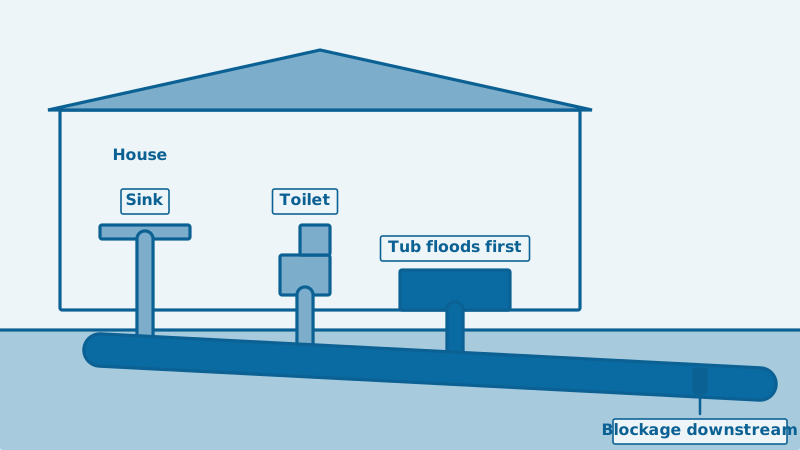
When sewage comes into a house, it comes out of the lowest opening, and in most Los Angeles homes that is the bathtub, a shower or a floor drain in the garage or laundry. The cause is almost always a blocked main sewer line, or a blockage in the lateral under the yard. The steps below are the first ten minutes. Our guide to main line drain cleaning covers the fix.
Why is sewage coming up in my bathtub?
The tub is the lowest fixture on the line in most houses without a basement, so it is where backed-up wastewater escapes first. The tub drain connects to the same line as the toilets, and when the main is blocked, water has nowhere to go but up. Gurgling in the tub when a toilet flushes is the early warning.
Signs that the problem is the main line, not the tub drain:
- Dark, foul-smelling water, often with solids, rises in the tub.
- A toilet gurgles or a sink burbles when you run the washing machine.
- More than one fixture is slow at once.
- The water drops after a while and returns the next time anything drains.
If only the tub is slow and the water is clear, you probably have a hair clog in that drain, covered in our guide to how to drain a clogged bathtub. The difference is simple: a tub clog affects the tub, and a main line clog affects the house.
What should I do in the first ten minutes of a sewer backup?
Stop all water use right away, keep everyone out of the wet area, and call a plumber. Do not flush, shower or run the dishwasher or washer. Every gallon you add will push more sewage up. Photograph the water before it spreads, and move belongings out of its path if it is safe.
A short list:
- Stop water use in the whole house, including the washing machine.
- Close the bathroom door to contain the spill if it is only a tub.
- Put towels or sandbags at the drain edge to slow spread. Do not use your hands.
- Do not pour chemical cleaners into the tub. They will not reach the clog and add hazard.
- Call a plumber and describe what is backing up. We'll arrange a visit.
- If the water is rising fast, call after-hours emergency service rather than waiting.
Keep rubber gloves on if you touch anything. Our emergency sewer backup page walks through the longer version.
Where in the house does a sewer backup show up first?
It shows up at the lowest drain in the house, whichever that is. In a one-story house it is often the bathtub or shower nearest the main line. In a home with a lower level, it may be a floor drain or a basement toilet. In a garage, it is the floor drain or a laundry standpipe.
Why the lowest? Water in a blocked sewer finds its level, and the line from the house to the street slopes downward. When it backs up, it rises in the pipe until it spills at the first opening below the level of the clog. A tub that sits lower than the clog will back up before a sink above it.
Los Angeles has hillside homes where the street is above or below the house. When a house sits below the street, its drains can be lower than the nearest sewer manhole, and backups are more likely. LA Sanitation notes that a lowest plumbing fixture below the street manhole cover calls for a backwater valve, which needs an LADBS permit. Our page on basement sewer backup goes deeper on that.
Is the sewer backup my responsibility or the city's?
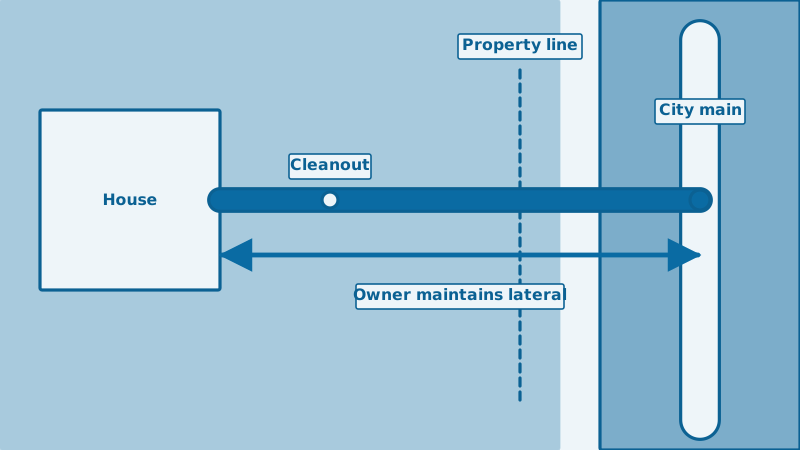
In the City of Los Angeles, the owner is responsible for the private sewer lateral, from the building to the connection at the city main, including the part under the street. LA County Public Works says the same for its areas. If the city main is the problem, it will show on the street, not only at your house.
How to tell:
- Only your house is affected: the blockage is probably in your lateral, and you arrange the plumber.
- Neighbors are affected, or manholes are overflowing: the city main may be the cause. LA Sanitation's Customer Care Center, 1-800-773-2489, is open 24 hours a day.
Tell the plumber about neighbors before they arrive. They can check the manhole nearest your house, and a camera pass will tell whether the blockage is yours. Keep your plumber's invoice and video either way, since they show where the blockage was.
How does a plumber fix a sewer backup into the house?
A plumber clears the main line with a powered cable or hydro jet through the cleanout, then runs a camera to find the cause. If roots or grease caused it, they cut or jet them out. If a pipe is cracked or sagging, the camera shows where, and the repair is quoted separately. A published Los Angeles main line clear runs about $200 to $1,000.
The visit has two parts that people confuse: the clear, which stops the backup today, and the cause, which stops it next month. If your camera pass shows roots, ask about a root treatment and an annual check. If it shows a break, see our sewer line repair prices.
The mess is a separate job. A plumber clears the line, and a restoration business cleans the house. See our guide to cleaning up a sewer backup for the sequence.
Ready for a visit? Request a written price. Our home page lists the other drain work we arrange.
Questions people ask
Why does sewer backup only happen in the bathtub?
The tub is usually the lowest fixture, so it is the first place wastewater escapes when the main is blocked. If you see backup in the tub and nowhere else, the lowest opening is the tub, but the cause is still the main line, not the tub drain.
Can a sewer backup into the house make me sick?
Sewage can carry bacteria and viruses, so avoid contact and wear gloves and boots during cleanup. If anyone has symptoms after exposure, or lives with a health condition, ask a doctor. CDC guidance covers safe cleanup. Keep children and pets out of the wet area.
Does a backup in the tub mean my pipes are broken?
Not necessarily. Most backups come from a clog, such as roots or grease, not a break. A camera pass tells which. LA Sanitation reports that over half of the backups it sees come from roots and fats, oils and grease, though damaged pipe also causes them.
How long does it take to fix a sewer backup into the house?
A plumber can often clear the line in one to two hours. The cleanup and drying that follow take longer, often two to five days. Ask the plumber when they can arrive and what is included in the price. Drying can run longer if walls or flooring were wet.
Sources used
- LA Sanitation, Managing and Protecting LA's Underground Sewer System
- Los Angeles County Public Works, Sewer
- CDC, Guidelines for Cleaning Safely After a Disaster
- Published prices of Los Angeles drain cleaning businesses, checked November 2026
Page updated