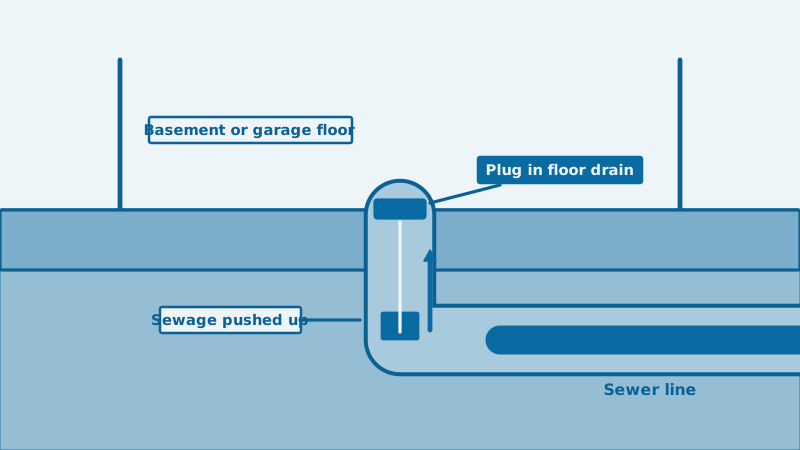
A floor drain plug blocks the opening of a floor drain so sewage cannot come up through it when the main sewer line backs up. Some plugs expand with a wrench, others float or sit on a spring. They work as an emergency measure, but a plug is not a permanent fix, and a backwater valve is the real defense. Our guide to main line drain cleaning starts with the line itself.
Does a floor drain plug really stop a sewer backup?
A tight plug can stop sewage from rising out of one floor drain, but it does not stop the backup. The sewage still fills the pipes and finds the next lowest opening, often a tub, shower or toilet. A plug protects one drain. It does nothing for the others, and it does nothing for the cause.
Think of it as sandbagging one doorway while the rest of the house stays open. In a house with one low floor drain in the garage or laundry, a plug may be exactly what you need to stop the worst of a spill. In a house with a basement bathroom, it only moves the mess.
Plugs also fail if they are the wrong size, installed loosely, or if the pressure is high. Ask yourself what happens if the plug leaks while you are away.
What kinds of floor drain plugs are there?
There are four common types: expandable rubber test plugs tightened by a wing nut, inflatable bladder plugs, float-ball plugs that rise with water and seal the opening, and permanent backwater valves built into the drain pipe. The first three are DIY items. The last is plumbing work that needs a permit.
| Type | How it works | Good for | Weak spot |
|---|---|---|---|
| Expanding rubber plug | Wing nut squeezes rubber against the pipe wall | Short-term sealing when you know a backup is coming | You must install it in time, and it blocks normal drainage |
| Inflatable plug | Pumped up inside the pipe | Odd pipe sizes | Can deflate, and needs a pressure check |
| Float or ball insert | Ball rises with backed-up water and seals | Automatic, needs no action | Debris can hold it open |
| Backwater valve | Flap closes if flow reverses | Whole-house protection | Needs a plumber, permit and maintenance |
Check the size of your drain before you buy. Floor drains are often two to four inches wide, and many have a removable strainer that sits in a threaded body. We do not rate named brands, and we have not tested any.
Should I plug a floor drain, or does it need to drain?
If the floor drain handles water from a washer, a a floor wash, plugging it blocks those flows. A plug is for the moment a backup is likely, not for everyday use. A floor drain also has a trap, which holds a little water to block sewer gas, and that water dries out if the drain is unused.
Two habits are worth having:
- Pour a quart of water into rarely used floor drains every month so the trap keeps its seal and the smell stays out.
- If you plug a drain, label it so nobody runs a washer into it later.
If a floor drain is a water source for your laundry, a plug that stays in place may cause a flood from your own machine. In that case, a backwater valve is the better fit, because it lets water out and keeps sewage from coming in.
What is better than a floor drain plug?
A backwater valve on the building drain is the standard answer. It lets wastewater leave your house and closes if sewage flows back from the street. LA County Public Works recommends a backflow preventer and a cleanout on the lateral. California Plumbing Code section 710.1 sets the rule for fixtures below the upstream manhole cover.
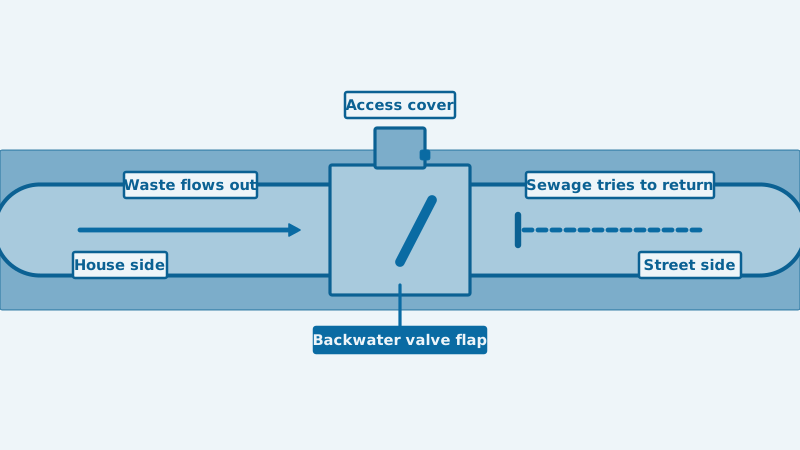
LA Sanitation says that if the lowest plumbing fixture in a home is lower than the street manhole cover, the property requires a backwater valve, and the valve requires a permit from LADBS. If you are not sure, a plumber can compare your lowest drain with the street manhole elevation.
A backwater valve is not maintenance free. Debris can hold the flap open, and the valve needs access for cleaning. Ask the plumber to show you where the access is. A valve also closes the pipe if the line backs up, so you should avoid running water while it is shut. The basement sewer backup page explains where valves matter most.
How do I fit a floor drain plug properly?
Remove the strainer, clean the opening, measure the inside width, choose a plug that matches, seat it and tighten it. Test with a bucket of water. A plug that sits loose is worse than no plug, because it gives false comfort. Put the plug where it can be reached fast, with the tool.
A short routine:
- Measure the pipe inside the strainer opening with a tape.
- Buy a plug for that size, rated for your use.
- Clean the opening of rust and debris so the rubber seats.
- Tighten by hand, then a quarter turn more with the wrench.
- Pour water around the plug and check for leaks.
Plug only the drains that need it, and remember that the clog is still there. Call a plumber for the line. If you see water rising fast, skip the plug and leave the area.
When should I stop using plugs and call a plumber?
Call a plumber when drains gurgle, when more than one fixture is slow, or when sewage has come up once. A plug does not clear a main line. A plumber can clear the line, add a cleanout, check whether you need a backwater valve and pull the permit, so the next storm or clog does not turn into a backup.
If sewage is already in the house, see our guide to cleaning up a sewer backup. If you want a visit, request a written price and tell us which drain is at risk. Our home page lists the rest of what we arrange.
Questions people ask
Can I leave a floor drain plug in all the time?
You can, if nothing drains into that floor drain. If a washer or a floor wash uses it, the plug will cause flooding. Keep plugs for drains that serve no appliance, and check them each season for cracks. A plug left in a dry drain also stops the trap from refilling.
Do floor drain plugs work against heavy rain flooding?
Not well. A plug may hold against sewage from below, but groundwater and surface water can find other paths. Plugs are not a flood barrier. A plumber can advise on drainage if water comes from outside the house. Sandbags and grading do more against surface water.
How much does a backwater valve cost?
We have no current Los Angeles price from an official source. Published national cost guides commonly put an installed backwater valve at roughly $1,500 to $4,500, and LA County Public Works estimated far less in an old 2011 fact sheet. Cutting concrete and trench length drive the bill. A plumber quotes after seeing the line.
Do I need a permit for a floor drain plug?
A loose plug you drop into a drain is not plumbing work in the usual sense, but a backwater valve is, and LA Sanitation says valves require an LADBS permit. Ask the plumber to handle the permit and to explain where the valve will sit and how to get at it.
Sources used
- LA Sanitation, Managing and Protecting LA's Underground Sewer System
- Los Angeles County Public Works, Sewer: backflow preventers and cleanouts
- Floor drain, how drain traps work
- Published national cost guides for backwater valve installation, checked November 2026
Page updated