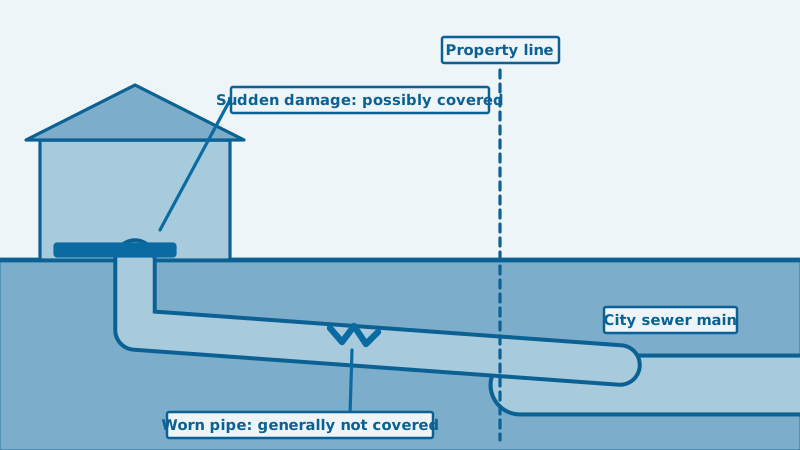
A standard homeowners policy generally does not pay to replace a main sewer line that has worn out, cracked from age or been invaded by roots. It may pay for sudden, accidental damage to the house that follows, if the cause is covered. We are a plumbing service, not an insurer, so confirm everything with your policy. For the repair methods themselves, see our guide to no-dig sewer line repair.
Does homeowners insurance pay to replace a sewer line?
Usually not. The California Department of Insurance lists wear and tear, seepage and leaks among things generally not covered, and a sewer lateral usually fails from age, ground movement or roots, which fall into those categories. Replacement of the pipe is treated as maintenance in most policies, and the owner pays.
There are exceptions. If a sudden, accidental event, such as a covered peril, breaks the pipe, the policy might pay for the damage under its terms. Policies differ, and a denial is not always the end: California requires a denial to be in writing with the reasons stated, and the California Department of Insurance can review a claim you believe was wrongly denied. Ask the adjuster to cite the policy language they rely on. A pipe that failed slowly over years is the case insurers decline most often.
What parts of a sewer line problem might insurance cover?
Possibly the damage to your home that a covered event causes, and sometimes the cost of reaching the pipe, depending on wording. A policy might also cover tearing out and rebuilding part of a floor to reach a leaking pipe. Replacing the failed pipe itself is the part most policies leave to you.
A rough division:
| Item | Likely outcome |
|---|---|
| The worn or root-damaged pipe | Generally not covered |
| Damage inside the house from a sudden covered event | Possibly covered |
| Sewage backup damage inside the house | Excluded unless you have a water backup endorsement |
| Digging up the yard or driveway to replace pipe | Generally not covered |
| Landscaping and paving restored after replacement | Generally not covered |
Because our page on whether home insurance covers sewer backup covers the backup side, here we stay on the pipe. We cannot say what your policy contains.
Does the type of replacement, trenchless or digging, change coverage?
The method does not change what the policy covers, but it changes the bill. Open-trench digging means tearing up landscaping or paving that you restore at your own cost. Trenchless methods, such as pipe bursting or lining, cut digging and restoration costs. Insurance rarely pays for either, so effectiveness and total price matter more than coverage.
Published Los Angeles ranges for a full replacement run roughly $5,000 to $15,000, with spot repairs of one failed section at $1,500 to $5,000. Landscaping and concrete repair are additional with digging, and can decide which method is cheaper in practice. Our page on trenchless pipe replacement and our price guide for sewer line replacement cost show the figures.
What if the policy has building code upgrade coverage?
Some policies include coverage for the extra cost of bringing a repaired part up to current code, often called ordinance or law coverage. It applies only when a covered loss has happened. The California Department of Insurance notes that some policies do not have building code upgrade coverage, so check yours.
That coverage will not turn a worn-out pipe into a covered loss. It only helps with the added cost, such as a new cleanout or backwater valve required by current rules, after a covered event. Ask the insurer to tell you in writing whether it applies.
What other help exists for sewer line replacement in Los Angeles?
The main source of help is a city program, not insurance. LA Sanitation's Sewer Lateral Repair Rebate pays city sewer customers up to $2,500 toward a repair by a bonded sewer contractor, first come, first served until the yearly funds run out. The City does not otherwise fund lateral repair. Confirm the current terms before you plan around it.
Notes from LA Sanitation's description: the repair needs an S-Permit, you submit the contractor's invoice, the inspection video, a CCTV report and the final signed permit, and approval depends on funds. The rebate applies to repair or replacement of the lateral, and it is not guaranteed.
The California Department of Insurance also points out that home protection contracts are not insurance. They cover repairs to systems and appliances such as plumbing, usually with their own limits and exclusions. Read any such contract for the words "sewer" and "underground" before you count on it.
How should I get ready to talk to my insurer about a sewer line problem?
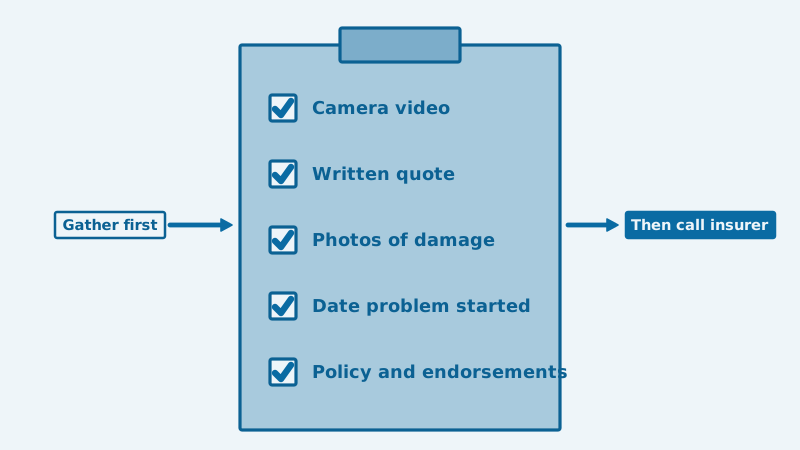
Have the plumber's camera video, the written quote, the date the problem started, and photographs of any damage. Ask the insurer what perils the policy covers and which endorsements you hold. Keep copies of everything. Do not start replacement before you know the insurer's position, unless the line is failing and sewage is entering the home.
An emergency changes the order. If sewage is backing up, stop it first and keep records. The California Department of Insurance advises protecting your property from further damage and documenting the loss. Our page on emergency sewer line repair covers what happens in an urgent job.
To price the work, send us the details through the price request form. The drain cleaning home page shows the rest.
Questions people ask
Does homeowners insurance cover a collapsed sewer line?
Sometimes the damage that follows is covered, but the pipe itself usually is not, because collapse is typically from age or ground movement. Whether the policy pays depends on the cause and the wording. Ask the insurer to explain in writing, and keep the camera video from the plumber.
Is a sewer line replacement a tax deduction or covered by a loan?
We cannot give tax or lending advice. A tax professional can say whether a repair is deductible, and a lender can describe home improvement loans. Keep the contractor's invoice and permit records for either. A written invoice that lists labor and materials is useful for either.
Who pays for the part of the sewer line under the street in Los Angeles?
In the City of Los Angeles, the property owner is responsible for the entire private sewer lateral, including the part under the street. The city owns the main and the connection structure. LA Sanitation says it does not provide financial assistance for lateral repair, apart from the rebate program.
Should I replace a sewer line before an insurance decision?
If sewage is coming into your home, stop it and protect the property now, keeping records. If the line is slow but working, you can usually take time to get a camera inspection, written quotes and an answer from the insurer.
Sources used
- California Department of Insurance, Residential Insurance: Homeowners and Renters
- California Department of Insurance, Residential Property Claims Guide
- LA Sanitation, Managing and Protecting LA's Underground Sewer System
- LA Sanitation, Sewer Lateral Repair Rebate
- Published prices of Los Angeles sewer line replacement, checked November 2026
Page updated