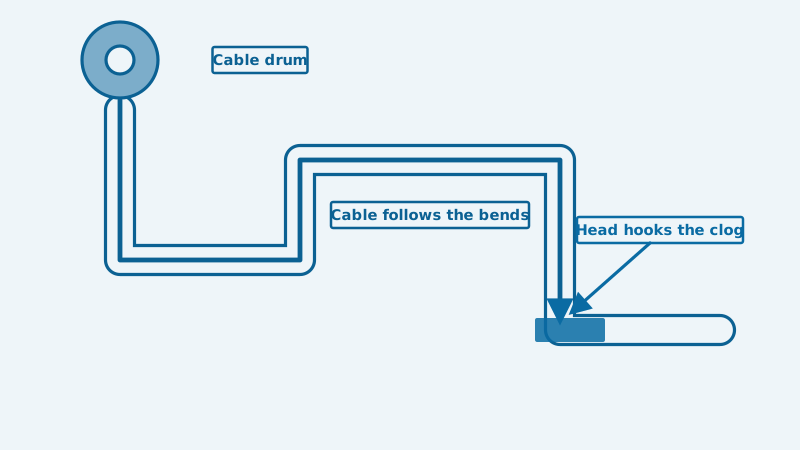
When a plumber snakes a drain, they insert a motorized cable into the pipe through a cleanout, trap or fixture opening, rotate it into the clog and pull it back out, then flush the line and test the flow. Most home visits take under an hour. Snaking clears the blockage, not the pipe coating, so some clogs return. Our drain snaking overview covers the method; this page covers the visit.
What does a plumber actually do when snaking a drain?
The plumber finds the best access point, usually a cleanout or the trap, and sets up a machine with a spinning cable. They insert the cable into the pipe until they feel the clog, rotate it to break up or hook the blockage, and then draw it back. They finish by running water to test flow.
The steps in order:
- Ask about symptoms and check which fixtures are slow.
- Choose the entry point: trap, vent, cleanout or fixture.
- Insert the cable and feed it to the clog.
- Work through, withdraw and clean off what came back.
- Run water to confirm flow and check for leaks.
A hand auger is the tool for a sink or tub. For a main line the plumber uses a drum machine with a thicker cable and sometimes a cutting head. Wikipedia describes the drum auger as a motorized unit with modular blades for different pipe gauges.
You should expect the plumber to explain what they found and give a price before starting.
What is the difference between a hand snake and a machine?
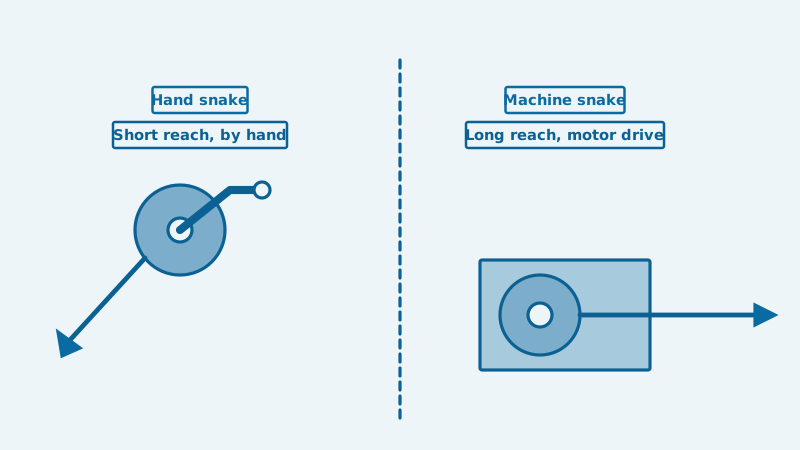
A hand snake is a crank-turned 1/4 inch cable good for sinks, tubs and showers. A machine is a motor-driven drum with a cable from 3/8 to 3/4 inch thick that reaches farther and cuts through roots. Machines are for branch lines and the main drain, not for a bathroom basin.
| Tool | Cable | Typical use | Risk if misused |
|---|---|---|---|
| Hand auger | 1/4 inch | Sink, tub, shower | Kinks, scratches fixtures |
| Small drum machine | 5/16 to 3/8 inch | Branch lines, laundry | Can scratch plastic |
| Large drum machine | 1/2 to 3/4 inch | Main sewer line | Can damage thin or cracked pipe |
Cable sizes vary by manufacturer. The point is that cable and pipe have to match. A cable that is too thick for a small pipe binds, and one that is too thin for a large pipe just coils inside it.
Can snaking a drain damage pipes?
It can, but a competent operator rarely does. Wikipedia notes that a motorized drum auger can damage plastic pipe and copper tubing if misused. The risk rises with old, thin or cracked pipe, and when a plumber pushes against a stuck cable instead of backing out.
Pipes that are already failing, such as an old clay line with offset joints or a cast iron line scaled thin, are the ones that suffer. If a cable keeps catching at the same place, that is information: a camera shows whether the pipe is broken. See sewer camera inspection.
For a healthy pipe the snaking itself does no lasting harm. A good plumber will stop if the cable binds, switch to a smaller head or recommend a camera.
Can snaking a drain make it worse?
Rarely, but yes. A cable can push a soft clog farther down, where it settles at a joint, or tear a root mass so that pieces catch and re-form. It can also bore a small hole in a grease plug while leaving the rest in place, so water flows but the pipe stays coated.
That is why some clogs return within weeks. Snaking cuts a path, not the whole pipe wall. Where grease or roots are the cause, a stronger clean such as jetting does a fuller job. Hydro jetting vs snaking explains the choice. If a drain is still slow after a cable run, our page on why a drain is still clogged after snaking covers the next steps.
Can a plumber snake a basement floor drain?
Yes. A floor drain in a basement, garage or laundry room is snaked through the grate or through a cleanout beside it. The plumber removes the grate and feeds a cable down. Floor drains often have a deep trap, so it takes a thin cable and a firm hand.
If water comes up through a floor drain when you use a washing machine or flush a toilet, the problem is usually in the main line, not the drain itself. In that case, the plumber will want to snake from a cleanout further along, which is covered on our main line drain cleaning page.
A floor drain that rarely sees water can dry out and let sewer gas through. Running water into it refills the trap and brings back the seal. Wikipedia notes that rarely used floor drains can dry out.
What are the fastest and strongest ways to clear a drain?
The fastest way is usually a cable run, because it removes the clog instead of dissolving it. The strongest chemical is a caustic cleaner, but it is also the most dangerous. Boiling water risks softening PVC, which Charlotte Pipe lists at 140 degrees Fahrenheit maximum working temperature.
Drain cleaners are very caustic, and the general rule is never to mix cleaning products. Dish soap and hot tap water may loosen a light grease film, but there is no strong evidence they clear a real clog. For a shower, the quickest start is a hook through the strainer. For a stubborn blockage, a cable beats any liquid. See chemical drain cleaning for the cautions.
How do I choose someone to snake my drain?
Ask for a written price before work starts, ask what cable and machine they use and whether they run a camera if the cable does not help. California requires a contractor license for jobs of $1,000 or more in labor and materials, according to CSLB, and you can check any license on the CSLB site.
LA Sanitation says property owners are responsible for the whole private sewer lateral, from the building to the street connection, so a main line clog on your side is yours to clear. Ask whether the plumber will tell you what they find on the way. For costs, our drain snaking cost page gives ranges and what moves them.
To book, we'll arrange a local drain cleaner to come to your home, and you get the quote in writing before work begins. To start, send a price request with what the drain is doing and where. The LA Drain Works home page lists the other jobs we arrange.
Questions people ask
How long does it take a plumber to snake a drain?
A single sink, tub or shower usually takes 30 to 60 minutes including setup and testing. A main line can take longer, especially if roots need cutting or a camera follows. Time depends on access, the length of run and what the cable finds. A plumber should give you an estimate before starting.
Does snaking a drain hurt the pipes?
Not in good pipes with a careful operator. Motorized cables can damage thin plastic, copper or old cracked pipe if forced. A plumber who feels resistance should back out and switch tools. If the cable keeps catching, a camera shows whether the pipe is broken.
Is a drain snake better than a chemical cleaner?
For most home clogs, yes. A cable removes the blockage rather than dissolving part of it, and it does not leave caustic liquid in the pipe. Chemical products risk burns, and mixing them can release poisonous gas. Use chemicals only with care, and never before a visit without telling the plumber.
What should I ask when booking a snaking visit?
Ask what the price includes, which machine and cable size they use and whether a camera is on hand if the cable fails. Get the quote in writing, and check the contractor's license on the CSLB site. Ask what they do if the clog returns.
Do I need to be home when the plumber snakes my drain?
Yes. An adult should be there to let them in and name the slow drains. Clear access to the sinks, the cleanout and any floor drain. You do not have to watch each step, but staying close lets you decide quickly if they find something else.
Sources used
- Wikipedia, plumber's snake
- Wikipedia, drain cleaner
- Contractors State License Board (CSLB), What You Should Know before hiring (the $1,000 threshold)
- CSLB, check a license
- Charlotte Pipe, PVC maximum working temperature (140 F)
- LA Sanitation and Environment, protecting the city's sewer system
- Poison Control, household product safety, 1-800-222-1222
Page updated