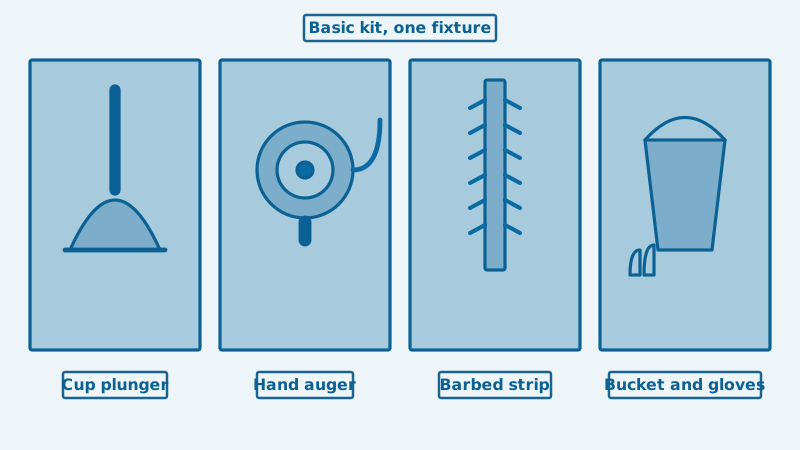
Start with the cheapest tool and move up one step at a time: hot water and a plunger, then a hand snake or a pulled trap, and only then a call. That order clears most single-fixture clogs without chemicals. This page walks through it, then covers the warning signs that mean the problem is bigger than one drain. If you would rather hand it over, the drain cleaning home page explains how a visit from a local drain cleaner works and what you get in writing.
How to clean a drain out?
You clean a drain out by removing what is stuck in the first foot or two of pipe, then flushing the rest through. Pull the stopper or strainer, lift out the hair and sludge, scrub the visible wall, then run the hot tap for a minute. If that does not restore flow, use a plunger, then a hand snake.
Work in this order and stop when the water runs freely:
- Look and lift. Take off the stopper, strainer or pop-up. Most bathroom clogs sit right under it as a mat of hair and soap.
- Hot water. Run the hot tap for a minute. Do not pour boiling water into a toilet or into old plastic or cracked porcelain fixtures.
- Plunge. Cover the overflow hole with a wet rag so the pressure goes down the pipe, then use short, firm strokes with a cup plunger over the drain.
- Snake. A 25-foot hand auger from a hardware store reaches the trap and a little beyond. Feed it in, turn the handle, pull back what it catches.
- Open the trap. Under a sink, put a bucket down and unscrew the slip nuts on the U-shaped bend. Clean it out, reassemble, and check for drips.
Each step is gentler than a chemical and tells you something. If the clog is in the trap, you find it in step 5. If a snake feeds in easily for 20 feet and water still backs up, the blockage is deeper than a hand tool reaches.
How to unclog a drain fast?
The fastest reliable fix is a plunger, used correctly. Seal the drain, keep enough water in the basin to cover the cup, and plunge with 15 to 20 firm strokes. Most soft clogs break up in a few minutes. A drain snake is the second fastest. Skip the bottles of acid and lye, which are slower and riskier.
Speed depends on what the clog is made of:
- Hair and soap in a tub or shower. A plastic drain strip with barbs pulls it out in a minute. See clearing a clogged bathtub for the tub-specific steps.
- Grease in a kitchen line. Hot water and dish soap soften it, but a snake or a pulled trap is quicker. Slow-draining kitchen and bathroom sinks have their own guide.
- Food in a garbage disposal line. Turn the disposal off at the switch and work the jam loose with the hex-key slot underneath, never with your hand.
- Something dropped down the drain. A ring, a toy or a bottle cap will not move with a plunger. Remove the trap and it usually drops straight into the bucket.
If you have tried a plunger and a snake and the water drains at the same speed, stop adding effort. Repeating the same step will not clear a blockage that is out of reach.
Can I pour vinegar down my drains to clean them?
Yes, vinegar and baking soda are safe to pour down a household drain, but they are a light cleaner, not a clog remover. The fizz can loosen a thin film of soap and grease. It will not dissolve a hair mat or a solid blockage. Use it for monthly freshening, then flush with hot water.
A cup of baking soda followed by a cup of white vinegar, left to foam for 15 minutes, is the usual routine. Two things to know. First, never follow a commercial drain cleaner with vinegar, bleach or any other product. Mixing leftover drain chemicals with acids or bleach can give off toxic gas. Fumes mean fresh air first, then Poison Control at 1-800-222-1222 or the online tool at poison.org. Call 911 if the person collapses, has trouble breathing or cannot be woken. Second, hard water is common across Southern California, and scale can build up in a pipe over time. Vinegar can soften a little of it at a fixture, but it does not treat the length of a drain line.
Chemicals are a gamble in older homes. Cast iron and clay drain pipe are often found in Los Angeles houses built decades ago, and a stubborn clog in rough old pipe tends to come back. If you are tempted to pour a second bottle, a mechanical fix is the better choice. Home remedies for clogged drains and chemical drain cleaning compare what each option does and does not do.
When does DIY drain cleaning stop being the right call?
Stop DIY when more than one fixture is affected, when sewage or gurgling shows up, or when a snake meets the same stop twice. Those warning signs point to the shared drainage line, not a single fixture. Work on a main line often means a camera, a larger machine, and sometimes a permit.
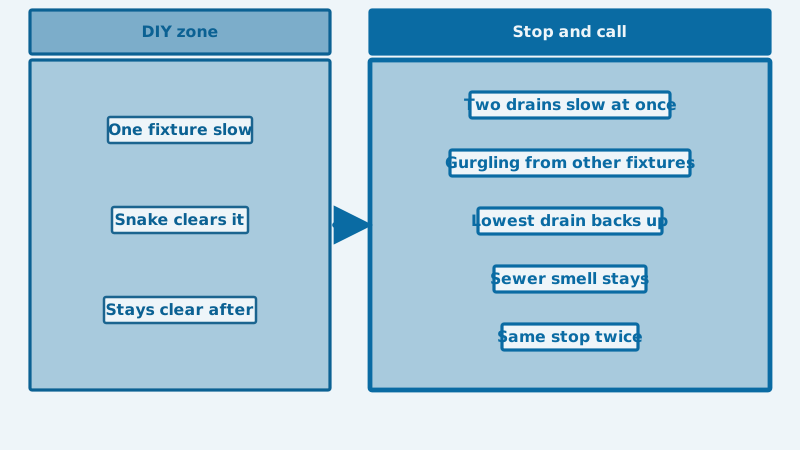
These are the signs that the problem is beyond a fixture:
- Two or more drains slow at once, such as the shower and the washing machine standing water together.
- Gurgling from a toilet or tub when another fixture drains.
- Water coming up in the lowest drain in the house, often a floor drain or a tub, when you run something upstairs.
- A sewer smell that does not clear after you run water in rarely used drains.
- Backups that return within days of being cleared.
If you own a home in the City of Los Angeles, the private sewer lateral is yours to maintain, the pipe from the house to the public sewer, street portion included. A repeating main line problem is worth diagnosing instead of clearing again and again. See main line drain cleaning for what the work involves, or read how an emergency service handles a backup that cannot wait.
How to tell if your plumber is overcharging you?
A fair quote is in writing before work starts, names what will be done, and gives a price or a range you can compare. Be wary of a figure that changes once the job begins, a quote with no description of the method, or pressure to approve work on the spot. Ask for the contractor license number and check it with the state.
Specific questions that sort a fair bid from a padded one:
- What exactly will you do, and with what? A cable machine, a hydro jet and a camera inspection are different jobs at different prices.
- Is the price flat or hourly, and what could change it? Access problems, no cleanout and roots all legitimately raise a price. Ask what they are before the visit.
- Is a camera inspection included? Seeing the pipe is how you tell a clog from a collapse.
- Can you show me what you found? A recording or photo of a root mass or a cracked joint is a fair thing to ask for.
Anyone taking on plumbing work in California as a contractor should hold a C-36 plumbing contractor license, or a C-42, C-34 or A license for the building sewer, which you can look up on the Contractors State License Board site. Get two quotes for anything beyond a basic clearing, and compare the method and the scope, not just the total, and choose the bid that explains the work best. Drain cleaning cost in Los Angeles lays out typical ranges and what pushes a quote up. If you would rather have a written price for your own drain than keep guessing, send a quote request and we'll arrange for a local drain cleaner to visit.
Questions people ask
How long does diy drain cleaning take?
A simple plunger job takes 10 to 30 minutes. Pulling a trap and cleaning it takes about the same. A hand snake through a stubborn tub clog can run an hour with setup and cleanup. If you are into a second hour with no change, the clog is probably beyond a hand tool.
What should I ask before I hire someone for diy drain cleaning?
If you want help finishing a job you started, ask what method they will use, whether the price is flat or by the hour, and whether a camera look is included. Ask for the price in writing. Tell them what you already tried, including any chemical in the drain, so they can handle it safely.
Do I need to be home for diy drain cleaning?
For your own DIY work, yes, since you are the one at the drain. If a local drain cleaner visits, an adult needs to give access to the fixtures and any cleanout, and to approve the written price before work begins. Mention locked gates, hillside access and parking when you book, and point out every cleanout and drain at the different locations in the house.
Is it safe to use a drain snake in an older Los Angeles home?
Yes for sinks, tubs and showers, if you go slowly. Do not force the cable. Old cast iron and clay drains can be rough or cracked inside, and a hard push can snag the head. If it will not advance or comes back with rust flakes, stop and have the line checked on camera.
Sources used
Page updated