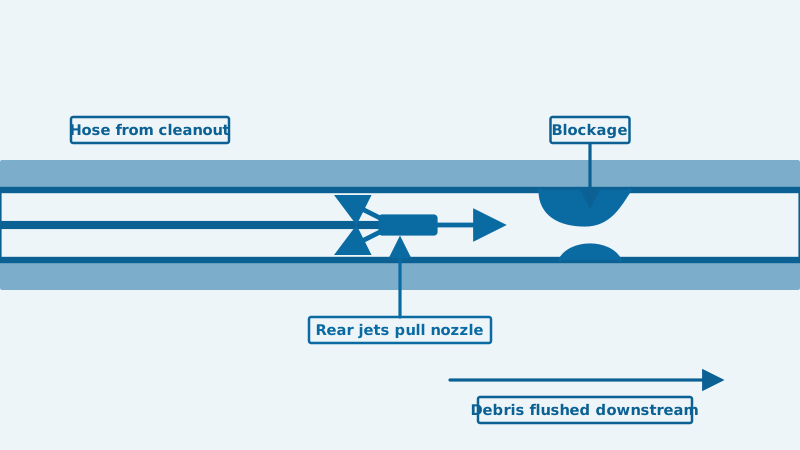
Hydro jet sewer cleaning pumps water through a hose with a special nozzle at pressures that typically run from about 1,500 to 4,000 PSI. The nozzle has rear-facing jets that pull the hose down the pipe and cut through grease, scale and roots as it goes. It is the method for a main line that keeps clogging, and our overall guide to hydro jetting drain cleaning covers the basics for every drain in the house. This page is about the big pipe, the line out to the street.
What does hydro jet sewer cleaning actually do?
A jetter sends water at high pressure down the main line through a nozzle that scours the pipe wall all the way round. The flow breaks up grease, flushes silt and scale, and cuts through soft roots. A cable only punches a hole through a blockage. Jetting washes the pipe, so the line is left cleaner, usually.
Specifications vary by machine, so figures you read are guidelines. Published specs for residential jetters sit near 3,000 PSI at about 5 or 6 gallons a minute, while larger truck units run higher in both pressure and water flow. Pressure cuts and flow carries. A good job uses enough of both to move debris out of the line, not just through it.
Jetting is often the best way to clear:
- Grease built up in a line from a kitchen
- Sand, silt and scale
- Fine root hairs that have furred a joint
- The residue a cable leaves behind on the pipe wall
Heavy roots in thick masses are better cut first with a blade, then jetted. Our page on hydro jetting versus snaking compares the two.
Is hydro jetting safe for older sewer pipe?
It can be, when the pipe is in sound condition and the operator is careful. The risk is real on old clay, cast iron and especially Orangeburg. A jet aimed at a weak joint can blast out mortar, and a nozzle left in one spot can crack brittle pipe. Published guidance disagrees on the safe pressure for old pipe, which is itself a warning.
Some contractors cap pressure around 2,500 to 3,000 PSI on sound clay and lower on worn cast iron. Others use less. Few agree, so ask. What they do agree on:
- Camera first. A look inside shows cracks, offsets and collapse before water goes in.
- No dwelling. Keep the nozzle moving, with gentle passes on old pipe.
- Not on Orangeburg. This tar-fiber pipe, laid in some houses up to the 1970s, can collapse under a jet.
- Not on collapsed or cracked pipe. Repair or replace first.
Clay is more forgiving than plastic in one respect, since it tolerates rougher cleaning, according to published material on the pipe. But its joints are the weak spot, which is why we recommend asking what pressure will be used. See old clay sewer pipe for more about what to expect from it.
When should I choose hydro jetting over a cable?
Choose jetting when the clog keeps coming back, when the blockage is grease or scale, or when roots have been cut and the line needs washing clean. Choose a cable first when the line is fully stopped and you need a path, or when the pipe is too fragile for pressure.
Many jobs use both. A cable or blade opens the line and cuts roots, and then a jetter washes it. A sewer camera inspection afterward confirms the pipe is clear, and shows whether the cause was a clog or a defect.
Signs the main line wants jetting:
- Backups at the lowest drain in the house, such as a floor drain or shower
- Several fixtures slow at once
- Gurgling when a toilet is flushed
- Cleaning that lasts only weeks
Cleaning does not repair a broken pipe. If the camera shows a crack, a collapse or a bad joint, jetting only delays the next backup.
What happens during a hydro jet sewer cleaning visit?
The visit usually starts at the cleanout. The operator checks the line, often with a camera, feeds the jet hose in, and works down the run with the nozzle moving, pulling back while the water scours. Debris flows to the street main or out through the cleanout, and a final camera pass confirms the line is clear.
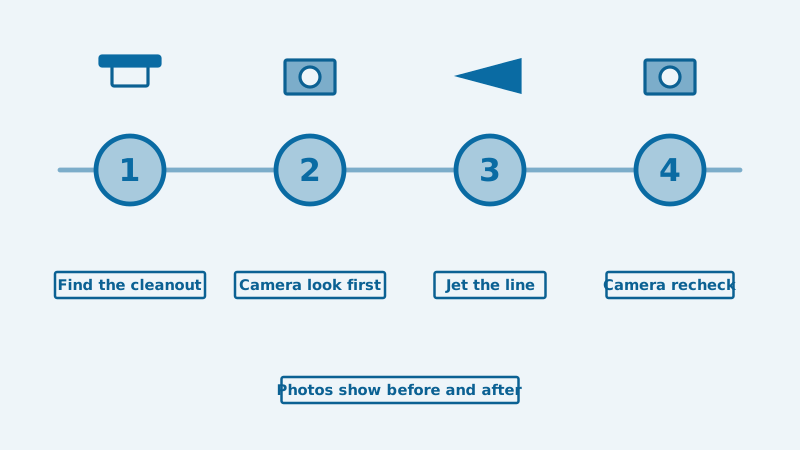
Expect these steps:
- Locate the cleanout, or a vent or toilet connection if there is none.
- Camera the line to see what you are cleaning.
- Choose the nozzle and set the pressure to suit the pipe.
- Work the hose forward and back through the problem area.
- Camera again and show you the result.
Plan for an hour or two for a typical single-family lateral, longer for a long or very dirty run. Water use is real, so a jetter needs a water source, usually a hose connection at your house or a tank on a truck.
Does jetting stop roots from coming back?
No. Jetting clears roots from the pipe, but the roots will return unless the entry point is sealed, and many sources put the interval at months to a few years. A foam root treatment can slow regrowth, and lining the pipe closes the joints roots use. See how to get rid of roots in a sewer line.
If the line has been lined with a resin liner, the line cannot be cleaned with cables afterward, only with water, which makes jetting the standard maintenance for lined pipe, according to published descriptions of the method.
How much does hydro jetting a sewer line cost in Los Angeles?
Published prices for a main line jetting run from several hundred dollars up to about $1,000 or more, with price rising for longer lines, heavy roots, difficult access and a camera pass. Our page on hydrojet drain cleaning cost breaks the price down, and we list the factors there.
The owner pays for the lateral up to the main, so a price should be written before the work starts. A quote request gets you a visit from a local drain cleaner we arrange, with a written price and nothing done until you agree. For everything else we offer, see the LA Drain Works home page.
Questions people ask
What is the difference between hydro jetting and hydro jet sewer cleaning?
They are the same method. "Hydro jet sewer cleaning" simply names the job of jetting the main sewer line, while hydro jetting can also mean cleaning a kitchen or branch drain. Both use high-pressure water through a hose and nozzle. The differences are the pipe size, the machine and the pressure chosen.
Can hydro jetting damage pipes?
Yes, if the pipe is cracked, thin or brittle, or if the operator uses too much pressure or stays in one spot. Old clay, cast iron and Orangeburg are the main concerns. Sound modern plastic pipe tolerates jetting well. A camera inspection first shows whether the pipe can take it.
How often should a sewer line be jetted?
There is no fixed schedule. A line with no history of trouble needs none. A line with roots or grease problems is often cleaned on a cycle of months to a few years, set by how fast the problem returns. A camera after each cleaning shows whether the interval needs to shorten.
Is hydro jetting better than snaking?
For grease and scale, yes, because it washes the pipe rather than boring through the clog. For a hard, fully stopped line, a cable often goes first. The right answer depends on what the blockage is, which is why a camera helps. See our comparison page for detail.
Will hydro jetting fix a collapsed sewer line?
No. Jetting cleans the inside of a pipe, and it cannot rebuild a collapse. If a camera shows a collapsed or crushed section, the repair is a dig, a liner where the pipe is open, or a replacement. Jetting that line can make the damage worse.
Sources used
- Vitrified clay pipe, tolerance of cleaning
- Orangeburg pipe, history and failure
- Cured-in-place pipe, cleaning after lining
- Los Angeles County Public Works, Sewer: owner responsibility for the lateral
- HomeGuide, hydro jetting cost (2026)
- Published equipment specifications and safety guidance from several jetter manufacturers and plumbing businesses, which differ on safe pressure for old pipe, checked November 2026
Page updated